PTSD doesn’t expire: How trauma resurfaces as we age
Major life changes can bring old trauma back to the surface
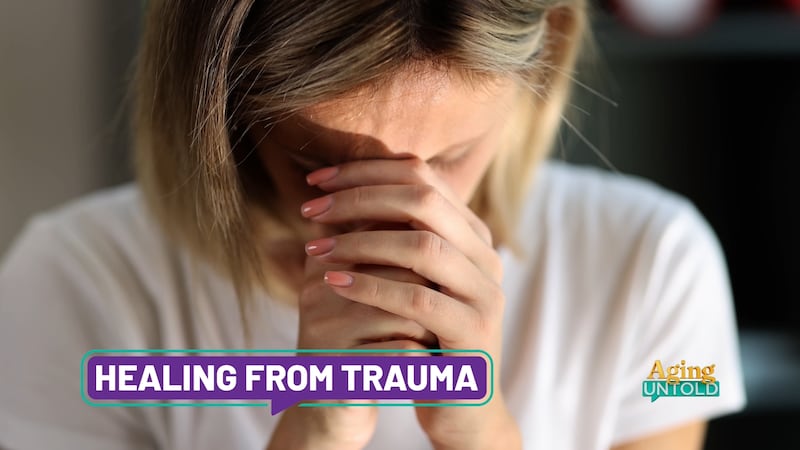
(Aging Untold) — Post-traumatic stress disorder, or PTSD, symptoms can become more noticeable later in life, especially during major life changes including retirement, illness or loss.
The Aging Untold experts are breaking down why trauma doesn’t simply fade with time, and what families and caregivers can do to recognize it.
PTSD is a body and brain still on alert
“PTSD is not just something bad happened,” Dr. Rhea Rogers, a board-certified physician, said. “It’s basically your body and your brain are still reacting to a danger as if it’s still present, even though it’s long been gone.”
Trauma is an “invisible suffering” that’s stored emotionally, neurologically and physically, Rogers said.
“The body’s trying to move past something that the brain is not allowing. So in a sense, your body will express what your mind does suppress,” Rogers said.
Sam Cradduck, a gerontologist, said trauma does not expire and PTSD is the past showing up and affecting your present.
PTSD is often associated with veterans and first responders, but Cradduck said it also affected health care workers who went through the COVID-19 pandemic.
“There is still a PTSD response,” Cradduck said. “That’s why we lost so many good workers from that.”
A car accident can leave a lasting physical response
Amy O’Rourke, an aging expert, described her own reaction after being in a serious car accident.
“My husband has had to adjust to how I’m riding in the car now, because if we get too close to a car, I get anxiety,” O’Rourke said.
Understanding a person’s full life story can explain behavior that might otherwise be misread, O’Rourke said.
She had a client who was easily irritated and startled and had to watch the front door. When he told her about his childhood, she said, she understood.
“And the more he talked, the more horrified I became at the abuse and the trauma that he went through, and it helped me really understand him and his behavior, because you could have written it off to dementia or depression or old age. We don’t always first think of trauma,” O’Rourke said.
Katherine Ambrose was also in a serious accident and said she feels more nervous in traffic than she used to be.
“I found myself, as I’m getting older, being a little more concerned in traffic and being a little more reactive,” Ambrose said. “I like to think I’m not a nervous person, but for some reason, I’m noticing a change.”
The brain stays in protective mode
Rogers said the brain’s instinct is to guard and stay in a “survival and protective mode.”
“You put up your guard, you stay in the defense until you feel like the danger is gone,” Rogers said.
That stress response keeps the body in fight-or-flight mode.
“You cannot repair or heal when you’re in fight or flight,” Rogers said.
Therapies some people turn to for relief
Ambrose said some people believe trauma and pain can become locked into the body, leading them to seek out yoga, massage, acupuncture or contrast therapy such as heat and cold treatments.
“I love that you’re seeing more and more, in many cities, different studios and clinics that you can go to for different types of therapy to see if that might help,” Ambrose said.
O’Rourke pointed to trauma-informed therapy, including EMDR, as another option.
“My goddaughter is a trauma therapist ... and she’s been wildly successful in this small town in Washington,” O’Rourke said. “For some reason, there’s a lot of trauma ... people who are suffering with trauma.”
Cradduck brought up the stresses of being part of an information community where everything’s 24-7.
“Our kids are suffering from trauma, and the anxiety levels are increasing way more now than ever before because there’s no off button, there’s no reset, there’s no rest and repair going on,” Cradduck said.
Cradduck added that service animals shouldn’t be overlooked.
“Don’t discount service dogs, don’t discount our service pets, and how rewarding they can be and how much help they can be,” she said. “Just feeling purpose and feeling connection again.”
Trauma doesn’t have to be dramatic to count
Rogers said trauma isn’t limited to major events like combat or accidents.
“I think sometimes the definition of trauma to everyone, they think it has to be something dramatic,” Rogers said. “Even for children, adverse childhood events — maybe your parents went through a divorce, or somebody went to jail. That’s still traumatic. I think we have to really look at what trauma means to different people, and their body is going to react to that differently.”
Ambrose said younger generations are sometimes judged harshly by older generations who compare today’s pressures to their own upbringing.
“They don’t understand the real pressure on kids,” Ambrose said.
Rogers said everyone has triggers and urged people in a caregiving role to know what the triggers are for the person they are caring for.
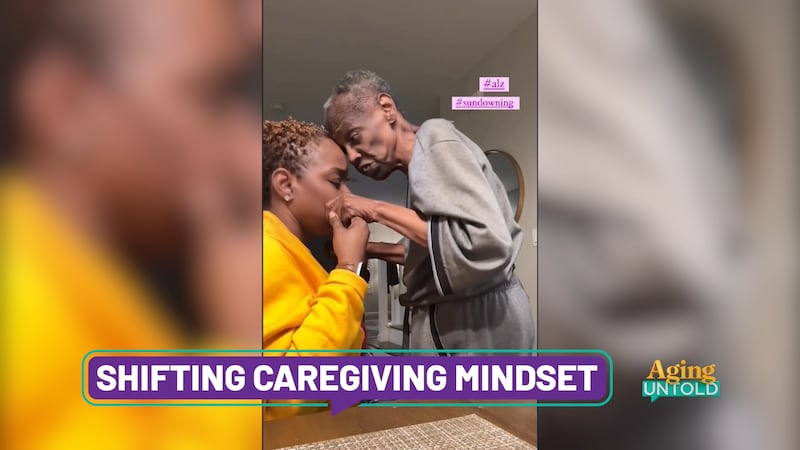
“If you’re taking care of a parent and they’re having signs of being easily irritated, think trauma also, and get them help with that, because it doesn’t come up. It’s not something that family members think of.” O’Rourke added.
Key takeaways
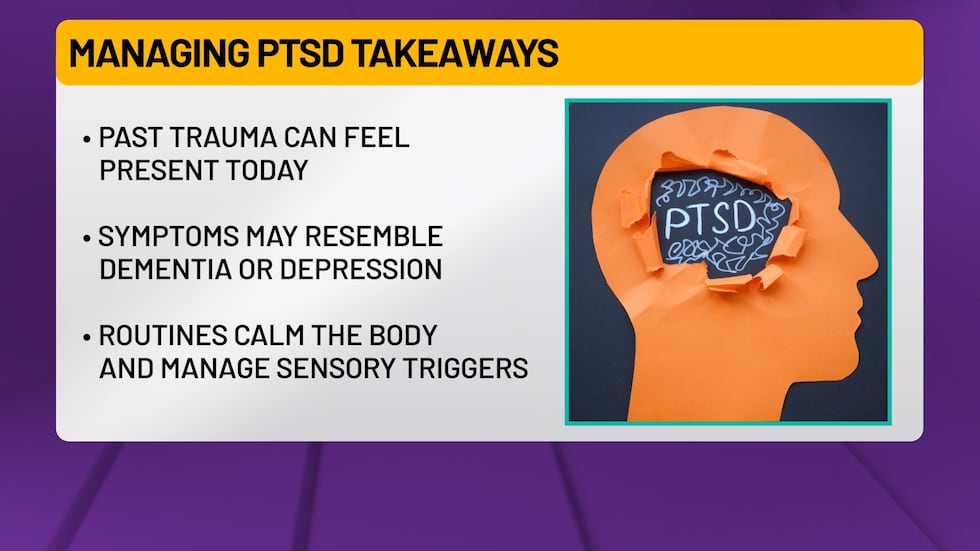
- PTSD is a present-tense reaction, not a memory. The brain and body respond as though a past danger is still happening today.
- Symptoms are often mistaken for dementia or depression in older adults, especially irritability or being easily startled.
- Keep a calm routine. Routines calm the body and help manage powerful sensory triggers.
This program is provided for educational and informational purposes only and does not constitute providing medical advice or professional services. The information provided should not be used for diagnosing or treating a health problem or disease, and those seeking personal medical advice should consult with a licensed physician. Always seek the advice of your doctor or other qualified health provider regarding a medical condition. Never disregard professional medical advice or delay in seeking it because of something you have seen on this program. If you think you may have a medical emergency, call 911 or go to the nearest emergency room immediately. No physician-patient relationship is created by this program or its use. Aging Untold/Gray Media, nor its employees, contractors or agents, nor any contributor to this program, makes any representations, express or implied, with respect to the information provided herein or to its use.
Copyright 2026 Gray Media Group, Inc. All Rights Reserved.